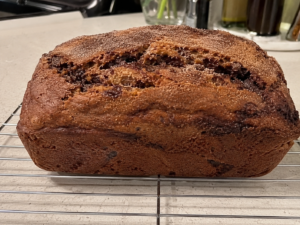
Cinnamon Chocolate Sourdough Bread is a delicious homemade loaf that combines the naturally tangy flavor of sourdough with warm cinnamon and rich chocolate. The outside develops a beautiful golden-brown crust while the inside stays soft, chewy, and filled with pockets of chocolate and cinnamon.
This recipe is perfect for breakfast, an afternoon treat, or a special homemade loaf to enjoy with coffee or tea. The dough is fermented naturally with sourdough starter, giving the bread a wonderful flavor and texture.
Ingredients
For the Sourdough Dough
- 500 g bread flour
- 350 g lukewarm water
- 100 g active sourdough starter
- 10 g salt
- 30 g honey or maple syrup
- 25 g softened butter
Cinnamon Filling
- 2 tablespoons softened butter
- 2 tablespoons brown sugar
- 1½ tablespoons ground cinnamon
Chocolate Filling
- 100–125 g chocolate chips or chopped chocolate
- 1 tablespoon cocoa powder, optional
- 1 tablespoon brown sugar, optional
Before You Begin
Make sure your sourdough starter is active and bubbly before beginning the recipe. A strong starter helps the dough ferment properly and gives the loaf a better rise.
The exact fermentation time will depend on the temperature of your kitchen and the strength of your starter. Instead of relying only on the clock, watch the dough for changes in size, texture, and bubbles.
Step 1: Prepare the Dough
Add the lukewarm water and active sourdough starter to a large mixing bowl.
Stir gently until the starter is mostly incorporated into the water.
Add the bread flour and mix until all of the flour is hydrated. The dough may look rough and sticky at first.
Cover the bowl and allow it to rest for about 30 minutes.
This resting period allows the flour to absorb the water and helps begin gluten development.
Step 2: Add Salt, Honey, and Butter
After the initial rest, add the salt and honey or maple syrup.
Mix gently using wet hands.
Add the softened butter and work it into the dough until it is reasonably well incorporated.
The dough may feel sticky, but avoid adding large amounts of extra flour because this can make the finished loaf heavy.
Step 3: Begin Bulk Fermentation
Cover the bowl and allow the dough to ferment at room temperature.
During the first few hours, perform several rounds of stretch and folds.
To stretch and fold, grab one side of the dough, gently pull it upward, and fold it over the center. Rotate the bowl and repeat from the other sides.
Perform a round approximately every 30–45 minutes for the first few rounds.
As the dough develops strength, it should become smoother, more elastic, and easier to handle.
Step 4: Prepare the Cinnamon Filling
While the dough is fermenting, prepare the filling.
Mix the softened butter, brown sugar, and cinnamon in a small bowl until you have a soft cinnamon paste.
Set aside until the dough is ready for shaping.
Keeping the filling soft but not runny makes it easier to spread across the dough.
Step 5: Prepare the Chocolate
Measure your chocolate chips or chop a chocolate bar into small pieces.
Chocolate chips are convenient, but chopped chocolate can create a more varied texture with both small pieces and larger melted pockets.
If desired, combine the chocolate with a little cocoa powder and brown sugar for an even richer chocolate flavor.
Step 6: Check the Dough
The dough is ready for shaping when it has become noticeably puffy and airy.
You may see bubbles around the edges or underneath the surface.
It does not necessarily need to double in size.
Because sourdough fermentation varies with temperature, use the appearance and feel of the dough as your guide.
Step 7: Shape and Add the Filling
Lightly flour your work surface.
Carefully turn the dough onto the surface.
Gently stretch it into a rectangle without pressing all the air out.
Spread the cinnamon mixture evenly over the dough, leaving a small border around the edges.
Sprinkle the chocolate pieces evenly over the cinnamon layer.
Avoid adding too much filling because excessive filling can make the loaf difficult to seal.
Step 8: Roll the Dough
Starting from one long side, carefully roll the dough into a tight log.
Try to keep the roll even from one end to the other.
Pinch the seam gently to help seal the loaf.
If some chocolate pieces escape while rolling, simply place them back inside the dough.
You can bake the loaf as a long log or shape it into a round depending on your preference.
Step 9: Final Shaping
For a round loaf, gently bring the ends together and tuck the dough underneath.
Create enough surface tension to help the loaf maintain its shape during proofing.
Place the shaped dough seam-side up into a well-floured banneton or a bowl lined with a floured kitchen towel.
Cover the dough.
Step 10: Cold Proof
Place the covered dough in the refrigerator for approximately 8–14 hours.
The cold proof allows the sourdough to continue developing flavor while making the dough easier to score and bake.
This overnight method is convenient because you can prepare the dough in the evening and bake it the following day.
Step 11: Preheat the Oven
When you are ready to bake, place a Dutch oven inside your oven.
Preheat the oven to approximately 230°C (450°F).
Allow the Dutch oven to become thoroughly hot.
The hot Dutch oven creates an enclosed baking environment that helps the loaf rise and develop a crisp crust.
Step 12: Score the Loaf
Remove the chilled dough from the refrigerator.
Place it onto parchment paper.
Use a sharp bread lame or razor blade to make a controlled score across the top.
A simple long slash works well.
Scoring allows the bread to expand in a controlled direction during baking.
Step 13: Bake
Carefully transfer the dough into the preheated Dutch oven.
Cover with the lid and bake at 230°C (450°F) for approximately 20 minutes.
The covered baking stage traps steam and helps the loaf achieve good oven spring.
After 20 minutes, carefully remove the lid.
Reduce the temperature to approximately 220°C (425°F) and continue baking for another 20–25 minutes.
The loaf should become deeply golden brown.
Keep an eye on the crust because the sugar, cinnamon, and chocolate can cause the exterior to brown more quickly than plain sourdough.
Step 14: Cool Completely
Remove the finished loaf from the Dutch oven and place it on a wire rack.
Allow it to cool for at least 1–2 hours before slicing.
This step is important because the interior continues to set as the loaf cools.
Cutting the bread while it is extremely hot can make the crumb appear gummy.
What to Expect
When sliced, the bread should have a soft and chewy sourdough interior with swirls of cinnamon and melted or partially melted chocolate.
The crust should be golden and slightly crisp, while the cinnamon gives the loaf a warm aroma and gentle sweetness.
Because this is naturally fermented bread, the flavor should have a pleasant sourdough tang balanced by the sweetness of cinnamon and chocolate.
Helpful Tips
Use an Active Starter
An active starter is essential for good fermentation and rise.
Don’t Add Too Much Flour
Sticky sourdough dough is normal. Adding excessive flour can make the bread dense.
Don’t Overfill
Too much cinnamon paste or chocolate can cause the loaf to separate during baking.
Keep Chocolate Away From the Edge
Leaving a small border around the dough makes sealing easier and helps prevent chocolate from leaking out.
Watch the Crust
Because this loaf contains sugar and chocolate, it may brown faster than a plain sourdough loaf. If the crust becomes dark too quickly, loosely cover it with foil during the final stage of baking.
Serving Ideas
Cinnamon Chocolate Sourdough Bread is delicious served warm or toasted.
Try it with:
- Butter
- Cream cheese
- Nut butter
- Fresh berries
- Greek yogurt
- A drizzle of honey
- A cup of coffee
- Hot chocolate
- Tea
Toasting the slices brings out the cinnamon aroma and creates warm, melty chocolate pockets.
Storage
Allow the loaf to cool completely before storing.
Keep it in a bread bag or suitable container at room temperature for the best texture.
For longer storage, slice the bread and freeze the slices in a freezer-safe bag. Individual slices can be toasted directly from frozen.
Final Thoughts
This Cinnamon Chocolate Sourdough Bread is a wonderful way to turn a traditional sourdough loaf into something extra special. The combination of naturally fermented bread, fragrant cinnamon, and rich chocolate creates a loaf that feels homemade, comforting, and indulgent.
It does require patience because sourdough fermentation takes time, but the process is straightforward once you understand the dough.
For the best results, use an active starter, give the dough enough time to ferment, handle it gently, and allow the finished loaf to cool before slicing. With a little practice, this can become a favorite homemade sourdough recipe for breakfast, brunch, or a sweet afternoon treat.

