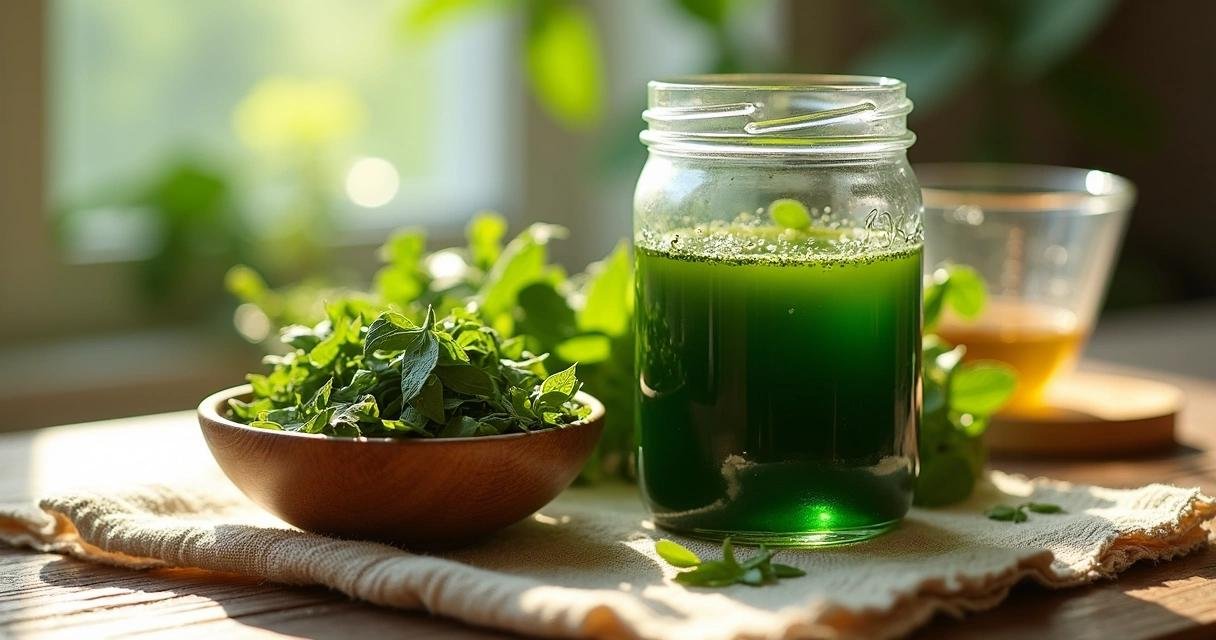
Fresh moringa leaf juice is a simple homemade drink prepared with fresh moringa leaves and water. Moringa, also known as the drumstick tree or sohanjna, is commonly used in traditional cooking in different parts of the world. Its leaves have a naturally green color and a distinctive earthy taste.
This recipe keeps the ingredients simple and the preparation easy. A little lemon juice can be added for freshness, while cucumber or mint can create a lighter flavor. You can adjust the ingredients according to your taste and enjoy the drink as part of a varied diet.
Important: Some social media posts claim that moringa juice can make uterine fibroids disappear in three hours. There is no reliable medical evidence supporting that claim. This recipe is a homemade drink, not a treatment for fibroids or other medical conditions.
Recipe Details
- Preparation time: 10 minutes
- Blending time: 2 minutes
- Total time: 12 minutes
- Servings: 1–2 small servings
- Course: Beverage
- Cuisine: Traditional-inspired homemade drink
- Main ingredient: Fresh moringa leaves
- Cooking method: No cooking required
Ingredients

- 1 cup fresh moringa leaves, loosely packed
- 1 cup clean drinking water
- 1 teaspoon fresh lemon juice, optional
- 2–3 cucumber slices, optional
- 2–3 fresh mint leaves, optional
Use only leaves that you can confidently identify as edible moringa. If you cannot identify the plant with certainty, do not use the leaves.
Instructions
Step 1: Select and prepare the leaves
Choose fresh, green moringa leaves. Avoid leaves that are yellow, moldy, wilted, or damaged. Remove the tougher stems and keep the tender leaves.
Place the leaves in a colander and rinse them thoroughly under clean running water. Gently move them around to remove dirt and other debris. Allow excess water to drain.
Step 2: Measure the ingredients
Measure one cup of washed moringa leaves and one cup of drinking water. Keeping the water amount moderate helps create a green drink with a noticeable leafy flavor.
If you prefer a milder taste, you can add a few cucumber slices. Mint leaves are another optional addition that can make the drink taste fresher.
Step 3: Add everything to the blender
Place the moringa leaves in a clean blender. Pour in the drinking water. Add the cucumber or mint if you are using them.
Secure the blender lid before switching it on. Start at a low speed and gradually increase it to help break down the leaves evenly.
Step 4: Blend until smooth
Blend for approximately 30–60 seconds, or until the leaves are finely broken down and the liquid looks evenly green.
The exact time depends on your blender. If the mixture is too thick, add a small amount of water and blend again. Avoid adding too much water at once, as it may dilute the flavor.
Step 5: Strain the drink if desired
For a smoother texture, pour the mixture through a fine-mesh strainer into a clean jug or glass. Press gently with a clean spoon to release the liquid.
If you prefer a thicker drink, you can leave it unstrained. Straining removes some of the solid plant material, including fiber, so the texture and nutritional content will differ.
Step 6: Add lemon juice
If desired, stir in one teaspoon of fresh lemon juice. Start with a small amount and adjust the flavor to your preference.
Lemon is optional. The drink can be made with just moringa leaves and water.
Step 7: Serve fresh
Pour the juice into a clean glass and serve immediately. The flavor is naturally earthy and slightly bitter, which is normal for a leafy green drink.
Avoid adding large amounts of sugar simply to cover the taste. If you do not enjoy the flavor, you can use moringa leaves in cooked dishes instead.
Tips for the Best Moringa Juice
Use fresh leaves. Fresh, properly identified leaves generally produce a greener-looking drink with a fresher flavor.
Wash carefully. Clean running water and clean preparation equipment help reduce dirt and contamination.
Start with a small serving. If you have never consumed moringa leaves before, avoid beginning with a large or concentrated amount, especially if you take medication or have an ongoing medical condition.
Adjust the texture. Add a little more water for a thinner drink or strain the mixture if you prefer a smoother consistency.
Keep the flavor simple. Lemon, cucumber, and mint are optional additions, not essential ingredients.
Prepare small batches. Freshly blended juice is best consumed soon after preparation.
Potential Nutritional Benefits of Moringa Leaves
Moringa leaves contain nutrients and plant compounds, including carotenoids and other antioxidant compounds. Their exact nutritional content varies with the plant variety, growing conditions, and preparation method.
1. Adds variety to your diet
Moringa leaves can be one of several leafy vegetables included in a varied eating pattern. They may also be used in soups, stews, and cooked vegetable dishes.
2. Provides plant compounds
The leaves contain naturally occurring plant compounds. However, the presence of these compounds does not establish that a drink can prevent or treat a specific disease.
3. Offers another way to enjoy leafy greens
Blending leaves into a drink is one way to prepare them, although eating the leaves in a cooked dish may be more satisfying and preserve the fiber that can be lost when the drink is strained.
4. Fits into a balanced lifestyle
A homemade drink can be enjoyed for its flavor if it suits your individual needs. It should not replace balanced meals, prescribed medicines, or recommended medical care.
Can Moringa Juice Remove Uterine Fibroids?
No reliable clinical evidence shows that moringa juice dissolves uterine fibroids in three hours or cures them.
Uterine fibroids are growths that develop in or around the uterus. They are often noncancerous, but symptoms can include heavy menstrual bleeding, pelvic pressure, pain, frequent urination, and reproductive difficulties in some people.
Treatment depends on the size and location of the fibroids, symptoms, age, and pregnancy plans. Some fibroids require monitoring only, while others may need medication or a medical procedure.
Do not delay medical assessment because of claims about a natural drink. Seek medical advice for persistent pelvic pain, unusually heavy periods, or other concerning symptoms. Sudden severe pain, fainting, or very heavy bleeding requires urgent medical attention.
Safety Precautions
Although moringa leaves are used as food, concentrated herbal preparations may not be suitable for everyone.
- Pregnancy: Avoid medicinal or concentrated moringa preparations during pregnancy unless your healthcare professional specifically approves them. Different parts of the plant may have different safety profiles.
- Medication use: Ask your healthcare professional or pharmacist before consuming moringa regularly, particularly if you take medication for blood sugar or blood pressure.
- Digestive sensitivity: Leafy drinks may cause digestive discomfort in some people.
- Allergies: Stop consuming the drink if you experience an allergic reaction.
- Plant identification: Never use unknown leaves based on appearance alone.
- Medical conditions: If you have an ongoing health condition, discuss regular use of herbal preparations with a qualified healthcare professional.
How to Store Moringa Juice
Fresh juice is best consumed immediately after blending. If you need to keep it for later, place it in a clean, covered container and refrigerate promptly at 4°C (40°F) or below. Use it within 24 hours and discard it if it develops an unusual smell, appearance, or texture.
Do not leave freshly prepared juice at room temperature for extended periods. Avoid storing it in an unclean container or repeatedly drinking directly from the storage bottle.
Frequently Asked Questions
Can I make moringa juice without lemon?
Yes. Lemon is optional. Moringa leaves and clean water are enough for the basic recipe.
Can I drink it every morning?
There is no universally established daily serving of homemade moringa juice. Regular consumption depends on your health, medications, and the amount used. Ask a healthcare professional if you intend to consume it frequently.
Does moringa juice balance hormones?
There is insufficient reliable clinical evidence to recommend moringa juice as a hormone-balancing treatment.
Can I use dried moringa leaves?
Dried leaves are used in some food preparations, but the flavor and concentration differ from fresh leaves. Follow product instructions and consult a healthcare professional before using concentrated products medicinally.
Can this juice replace medical treatment for fibroids?
No. Moringa juice has not been established as a fibroid treatment and should not replace recommended medical care.
Conclusion
Fresh moringa leaf juice is a straightforward homemade drink that requires only a few ingredients and a blender. You can prepare it with moringa leaves and water, then add lemon, cucumber, or mint if desired.
Enjoy this recipe as a food and beverage idea rather than a medical remedy. Moringa juice has not been proven to dissolve uterine fibroids or make tumors disappear within hours. Anyone experiencing fibroid symptoms should consult a qualified healthcare professional to discuss appropriate assessment and treatment.

