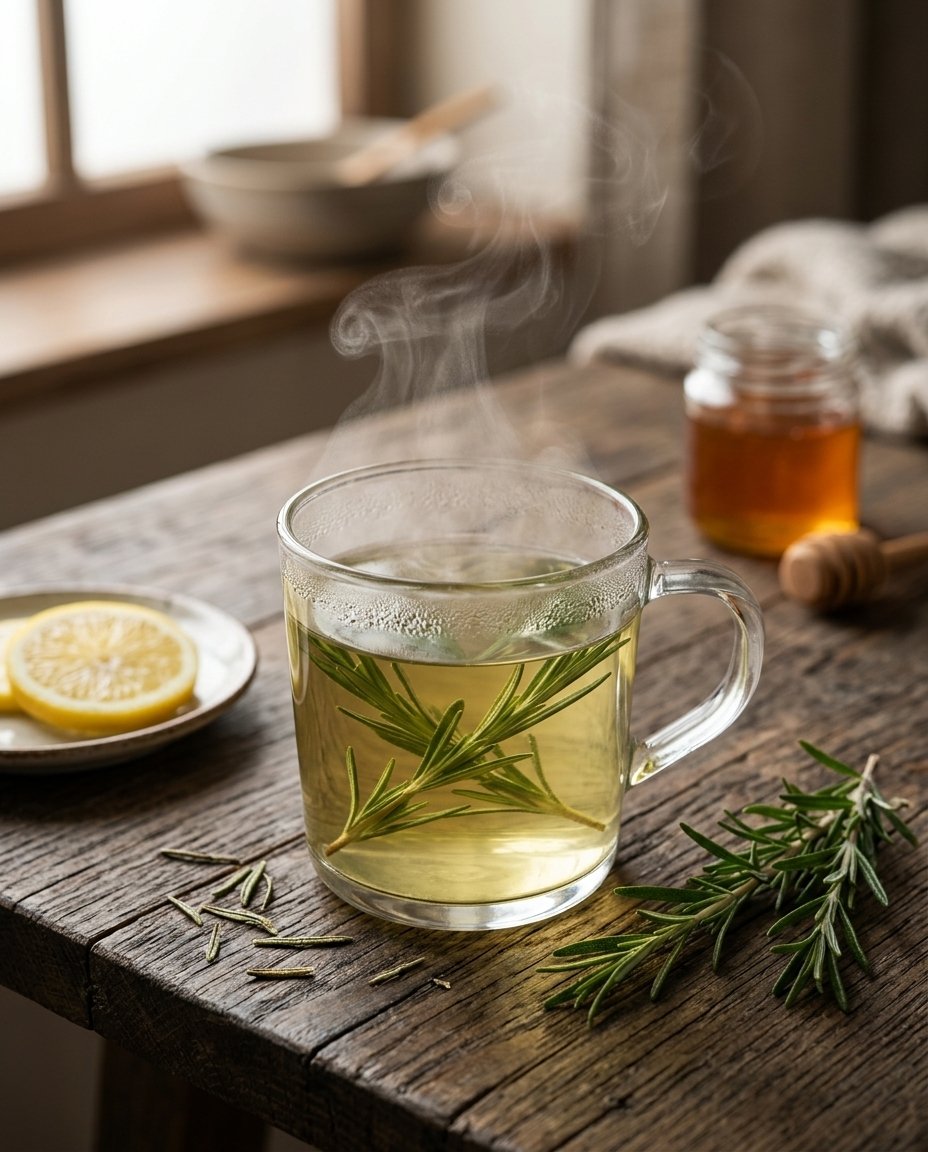
A cup of rosemary tea is one of the simplest things you can make in your kitchen. All you need is a few sprigs of rosemary and hot water. The tea has a warm, piney aroma, a gentle earthy flavor, and a slightly citrusy finish. It is naturally caffeine-free, so you can enjoy it in the morning, after dinner, or any time you want a calming cup.
Rosemary has been used in cooking and home kitchens for centuries. To be clear, this tea is a flavorful herbal drink and not a medicine. It is not a cure for any condition, and it will not fix pain or health problems on its own. Think of it as a cozy, hydrating habit that fits into a balanced lifestyle with good food, sleep, and regular checkups.
Why You’ll Love This Recipe
- Only 2 ingredients, with optional extras for flavor
- Ready in 10 minutes with no special equipment
- Caffeine-free, so it works any time of day
- Works with fresh or dried rosemary
- Easy to customize with lemon, honey, ginger, or mint
Recipe at a Glance
- Prep time: 2 minutes
- Steep time: 7 to 10 minutes
- Total time: About 10 minutes
- Yield: 1 large cup (about 250 ml)
- Difficulty: Very easy
Ingredients
Basic rosemary tea:
- 1 to 2 fresh rosemary sprigs, each about 10 cm (4 inches) long, or 1 teaspoon dried rosemary
- 1 cup (250 ml) water
Optional add-ins:
- 1 slice of fresh lemon or 1 teaspoon lemon juice
- 1 teaspoon honey or maple syrup
- 2 thin slices of fresh ginger
- A few fresh mint leaves
- 1 small cinnamon stick
Equipment
- Small saucepan or kettle
- Mug or teapot with a lid
- Fine mesh strainer
- Measuring cup and spoons
Step-by-Step Instructions
Step 1: Prepare the Rosemary
Rinse the fresh rosemary sprigs under cool water and pat them dry. Gently bruise the leaves by rolling them between your palms or pressing them lightly with the back of a spoon. This releases the natural oils and gives you a more fragrant tea. If you are using dried rosemary, measure out 1 teaspoon and skip this step.
Step 2: Heat the Water
Pour 1 cup of water into a small saucepan or kettle and bring it to a boil. Remove it from the heat and let it sit for about 30 seconds. Water that is just off the boil extracts good flavor without making the herb taste harsh.
Step 3: Steep
Place the rosemary in your mug or teapot and pour the hot water over it. Cover with a lid or small plate to trap the aroma, and steep for 7 to 10 minutes. Seven minutes gives a mild, pleasant tea. Ten minutes gives a stronger, more savory cup.
Step 4: Strain
Pour the tea through a fine strainer into a clean mug to remove the leaves and any needles. Rosemary needles are sharp and woody, so straining makes for a much nicer drink.
Step 5: Flavor and Serve
Add a squeeze of lemon, a little honey, or any of the optional extras. Stir, taste, and adjust. Sip it warm and slowly.
Pro Tips for Success
- Do not over-steep. More than 10 to 12 minutes can make the tea bitter and overly medicinal in taste.
- Bruise fresh leaves. This is the easiest way to get more aroma from the herb.
- Cover while steeping. The aromatic oils escape with the steam if the cup is left open.
- Start with less. Rosemary is a strong herb, so begin with one sprig and increase only if you like it.
- Use fresh, good-quality herbs. Dried rosemary that has sat in the cupboard for years loses most of its flavor.
- Strain well. Needles in the cup are unpleasant to swallow.
Fresh vs. Dried Rosemary
Fresh rosemary gives a brighter, more fragrant, slightly sweet-piney tea. Use 1 to 2 sprigs per cup.
Dried rosemary gives a deeper, more concentrated flavor. Use about 1 teaspoon per cup, and be sure to strain carefully because the small pieces can linger in the cup.
If you grow rosemary at home, cut sprigs in the morning for the best aroma, and always wash them before use.
Troubleshooting
My tea tastes too strong or bitter. You may have steeped it too long or used too much rosemary. Use one small sprig and steep for 5 to 7 minutes next time.
My tea tastes weak. Bruise the leaves before steeping, cover the cup, and steep a little longer.
There are bits floating in the cup. Use a finer strainer, or pour the tea through a clean paper coffee filter.
It tastes too herbal. Add lemon, ginger, or a small amount of honey to soften and brighten the flavor.
Flavor Variations
- Lemon rosemary tea: Add 2 slices of lemon and 1 teaspoon honey for a bright, refreshing cup.
- Ginger rosemary tea: Steep 2 slices of fresh ginger with the rosemary for a warm, spicy flavor.
- Mint rosemary tea: Add 5 or 6 fresh mint leaves for a cooling twist.
- Cinnamon rosemary tea: Steep with a small cinnamon stick for a cozy winter drink.
- Iced rosemary tea: Make a double-strength batch, cool it completely, and serve over ice with lemon slices and a sprig of fresh rosemary.
- Apple rosemary tea: Simmer a few thin apple slices with the rosemary for a naturally sweet, fruity version.
Make-Ahead Iced Rosemary Tea (Pitcher Recipe)
To serve a group, use 4 to 5 sprigs of fresh rosemary and 4 cups (1 liter) of hot water. Steep for 10 minutes, strain, and stir in 2 tablespoons of lemon juice and honey to taste. Cool, then chill in the fridge for at least 2 hours. Serve over ice with lemon slices and a fresh rosemary sprig as a garnish.
Serving Suggestions
- Warm in the morning as a caffeine-free alternative to coffee
- After a heavy meal as a fragrant, comforting finish
- With a slice of lemon cake, shortbread, or olive oil cake
- Alongside a light lunch of soup, salad, or roasted vegetables
- Chilled with ice and lemon on a hot afternoon
Storage
- Fresh rosemary: Wrap sprigs in a slightly damp paper towel and store in the fridge for up to 2 weeks.
- Dried rosemary: Keep in an airtight jar away from light and heat for up to 1 year.
- Brewed tea: Cool completely, store in a covered glass jar in the fridge, and drink within 2 days.
- Reheating: Warm gently on the stove or in the microwave. Do not boil it again.
Nutrition (Approximate, Per Cup)
Plain rosemary tea has virtually 0 calories, 0 g fat, and 0 g protein. Adding 1 teaspoon of honey adds about 20 calories and 5 g of carbohydrates.
Who Should Be Careful
Rosemary tea is a food-style drink, but herbs are not right for everyone. Please keep these points in mind:
- Pregnant or breastfeeding women should ask their doctor before drinking herbal teas regularly.
- People with epilepsy or seizure disorders should check with their doctor, since rosemary is often advised against in larger amounts.
- People taking blood thinners, blood pressure medicine, diabetes medicine, or diuretics should ask their doctor or pharmacist first.
- People with allergies to rosemary or related herbs, such as mint, sage, or oregano, should avoid it.
- Children should not be given herbal teas regularly without medical advice.
- Moderation matters. One or two cups a day is plenty for most people.
- Ongoing pain or health problems need a proper medical evaluation. No tea replaces a doctor’s care.
Final Thoughts
Rosemary tea is a quiet, aromatic little ritual. It costs almost nothing, takes minutes to make, and fills your kitchen with a lovely herbal scent. Enjoy it for its flavor and the simple comfort of a warm cup, and pair it with healthy habits like a balanced diet, enough water, movement, and good sleep.
If you try it, tell me in the comments how you like yours, with lemon, honey, or ginger. Happy sipping!

