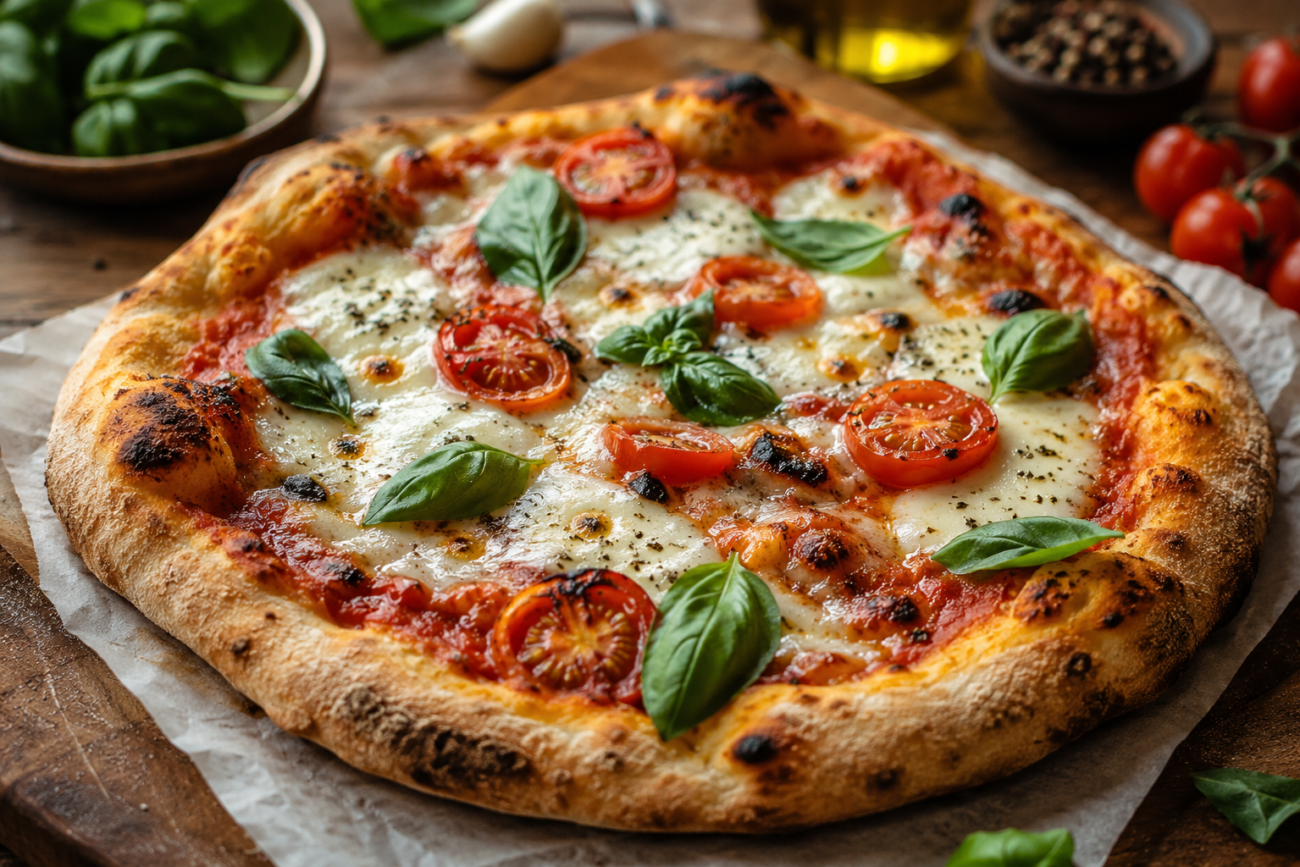
There is something special about making pizza from scratch, and homemade sourdough pizza takes it to another level. The crust develops a deliciously chewy texture, crisp edges, and a subtle tangy flavor that makes every bite feel homemade and satisfying. Once you get comfortable with sourdough pizza dough, you may find yourself making it for family dinners, weekend gatherings, and casual pizza nights again and again.
This recipe uses a simple sourdough starter, flour, water, salt, and olive oil to create a flavorful dough. You can keep the toppings classic with tomato sauce and mozzarella or customize your pizza with vegetables, herbs, meats, or your favorite cheeses.
Why Make Sourdough Pizza?
Sourdough pizza is a wonderful way to use an active sourdough starter. Instead of relying entirely on commercial yeast, the starter helps ferment the dough and contributes to its distinctive flavor.
The dough can also be prepared ahead of time, making it convenient for busy days. Once the dough has fermented, you simply shape it, add your favorite toppings, and bake it in a very hot oven.
The result is a pizza with a golden crust, slightly crisp edges, a soft center, and plenty of flavor.
Ingredients
For the Dough
- 100 g active sourdough starter
- 350 g bread flour
- 230 g lukewarm water
- 10 g olive oil
- 8 g salt
For the Topping
- ½ cup pizza sauce
- 200 g shredded mozzarella cheese
- ½ cup sliced mushrooms
- ½ cup sliced bell peppers
- ¼ cup sliced black olives
- Fresh basil
- A pinch of dried oregano
- Olive oil for drizzling
You can easily change the toppings according to your preferences. Pepperoni, cooked chicken, onions, spinach, tomatoes, roasted vegetables, or other favorite pizza toppings can work beautifully.
Prepare the Sourdough Dough
Start by making sure your sourdough starter is active and bubbly. An active starter is important because it helps the dough ferment properly.
In a large mixing bowl, combine the sourdough starter and lukewarm water. Stir until the starter is mostly dissolved.
Add the bread flour and mix until a rough dough forms. Cover the bowl and let it rest for about 30 minutes. This short resting period gives the flour time to absorb the water.
After resting, add the salt and olive oil. Mix and gently knead the dough until the ingredients are fully incorporated.
The dough may feel slightly sticky at first, but resist adding too much extra flour. A slightly wet dough can help create a lighter, more flavorful crust.
Stretch and Fold the Dough
Instead of aggressively kneading the dough, you can strengthen it with a few rounds of stretching and folding.
With slightly wet hands, grab one side of the dough, stretch it upward, and fold it toward the center. Turn the bowl and repeat on the other sides.
Perform this process every 30 minutes for the first 1½ to 2 hours.
As you continue, the dough should become smoother, stronger, and more elastic.
First Fermentation
Cover the bowl and allow the dough to ferment at room temperature.
Depending on the temperature of your kitchen and the strength of your starter, this can take approximately 4–6 hours. Look for the dough to become noticeably puffy and slightly increased in volume.
Sourdough fermentation times can vary, so pay attention to the dough rather than relying only on the clock.
Divide and Shape
Once the first fermentation is complete, lightly flour your work surface.
Turn the dough out and divide it into two equal portions. Gently shape each portion into a smooth ball.
Place the dough balls into lightly oiled containers or a covered tray.
For deeper flavor, refrigerate the dough for several hours or overnight. A longer cold fermentation allows the sourdough flavor to develop beautifully.
If you are in a hurry, you can allow the dough to continue resting at room temperature until it becomes soft and airy.
Prepare the Oven
When you are ready to bake the pizza, preheat your oven to its highest suitable temperature. A very hot oven is one of the secrets to achieving a beautifully crisp pizza crust.
If you have a pizza stone or pizza steel, place it in the oven while it preheats. Allow plenty of time for the baking surface to become thoroughly hot.
If you do not have a pizza stone, a heavy baking sheet can work as well.
Shape the Pizza
Take one dough ball and place it on a lightly floured surface.
Gently press the center of the dough with your fingertips while leaving a slightly thicker border around the edge. Slowly stretch the dough outward until you have your desired pizza size.
Avoid using a rolling pin if you want a light, airy crust because rolling can press out some of the gas developed during fermentation.
Transfer the shaped dough onto parchment paper or a lightly floured pizza peel.
Add the Toppings
Spread a thin layer of pizza sauce over the dough, leaving a small border around the edges.
Sprinkle mozzarella evenly over the sauce.
Add mushrooms, bell peppers, olives, or any other toppings you enjoy. Finish with oregano and a small drizzle of olive oil.
Try not to overload the pizza with toppings. Too many ingredients can make the center heavy and prevent the crust from becoming crisp.
Bake the Pizza
Carefully transfer the pizza to your preheated stone, steel, or baking sheet.
Bake until the crust is deeply golden and the cheese is melted and bubbling. Depending on your oven temperature, this may take approximately 7–12 minutes.
Keep an eye on the pizza during the final few minutes because sourdough crust can brown quickly in a very hot oven.
For an extra golden top, you can briefly use the broiler or grill function if your oven has one. Watch carefully so the toppings do not burn.
Finish and Serve
Remove the pizza from the oven and let it rest for a minute or two.
Add fresh basil, a light drizzle of olive oil, or a sprinkle of Parmesan if desired.
Slice the pizza and serve while warm.
The contrast between the crisp crust, chewy center, melted cheese, and fresh toppings makes this homemade sourdough pizza incredibly satisfying.
Tips for Better Sourdough Pizza
Use an active starter that has recently been fed and is showing plenty of bubbles. A weak starter may result in a dough that takes much longer to rise.
Do not add excessive flour while shaping. Sourdough dough can be sticky, but too much flour can make the finished crust heavy.
Give the dough enough time to ferment. Sourdough depends on fermentation for both flavor and texture.
Preheat your oven thoroughly. The hotter the baking surface, the better the crust is likely to become.
Keep toppings relatively light. A thin layer of sauce and moderate toppings allow the crust to bake properly.
If you enjoy a crispier crust, bake the pizza slightly longer or use a preheated pizza steel or stone.
Topping Ideas
Classic Margherita is always a great choice. Use tomato sauce, fresh mozzarella, basil, and olive oil.
For a veggie pizza, try mushrooms, bell peppers, onions, olives, and spinach.
For a chicken pizza, add cooked seasoned chicken with mozzarella, red onion, and a little barbecue sauce.
You can also make a simple garlic and herb pizza with mozzarella, roasted garlic, Parmesan, olive oil, and fresh herbs.
For something creamy, try mozzarella with ricotta, spinach, and a little black pepper.
Storing Leftovers
If you have leftover pizza, allow it to cool and store it in an airtight container in the refrigerator.
To reheat it, use an oven, toaster oven, or air fryer. These methods help bring back some of the crispness of the crust.
Avoid overheating the pizza in the microwave if you want to maintain a crisp crust, although the microwave is perfectly fine when convenience is the priority.
Final Thoughts
Homemade sourdough pizza is a delicious project that becomes easier every time you make it. The dough requires patience, but the reward is a flavorful crust with crisp edges and a soft, chewy center.
Whether you prefer classic cheese, fresh vegetables, chicken, or a simple garlic and herb topping, sourdough pizza gives you endless possibilities.
Make the dough ahead, let it ferment, heat your oven well, and keep the toppings simple. With a little practice, you can create a homemade pizza that feels just as special as one from your favorite pizzeria—right in your own kitchen.

