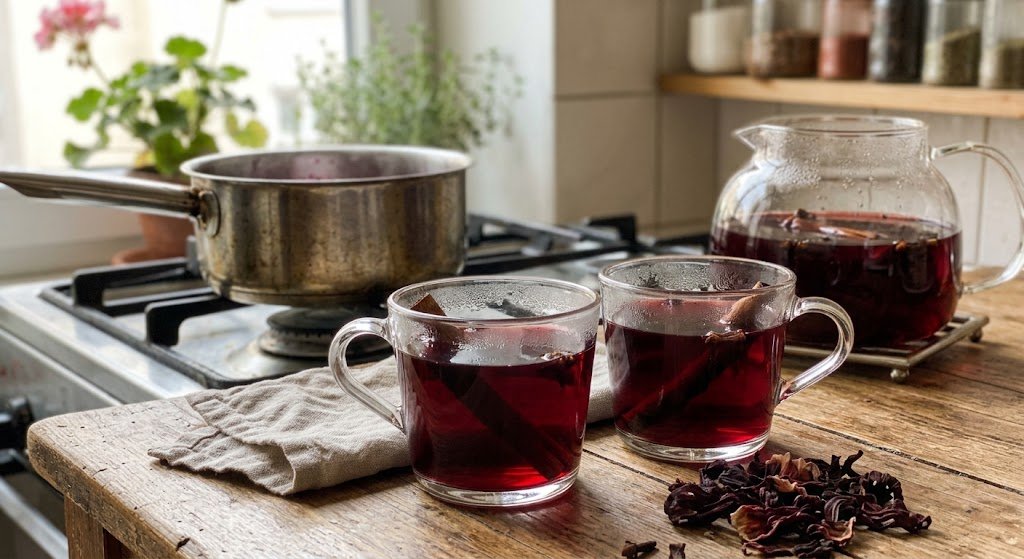
Hibiscus Cinnamon Clove Tea is a flavorful homemade herbal drink with a beautiful ruby-red color, a refreshing tart taste, and a warm spicy aroma. Made with dried hibiscus flowers, cinnamon, cloves, and water, this simple recipe is easy to prepare using everyday kitchen equipment.
Whether you enjoy a warm cup on a cool morning or a chilled herbal drink during the afternoon, this recipe offers a delicious alternative to many sugary beverages. The natural tanginess of hibiscus blends beautifully with the comforting flavor of cinnamon and the distinctive aroma of cloves.
Another advantage of making this tea at home is that you can control the ingredients and sweetness. You do not need special equipment, complicated techniques, or expensive packaged tea mixes. A small saucepan and a strainer are enough to prepare a flavorful drink in approximately 15 minutes.
Hibiscus contains naturally occurring plant compounds, including anthocyanins. Some research suggests that hibiscus tea may modestly lower blood pressure in certain people, although the evidence is not conclusive. This tea is a beverage, not a treatment for kidney disease, high creatinine, diabetes, or high blood pressure.
What Is Hibiscus Cinnamon Clove Tea?
Hibiscus Cinnamon Clove Tea is an herbal infusion made by steeping dried hibiscus flowers with cinnamon and whole cloves in hot water.
Hibiscus gives the drink its deep red color and pleasantly sour flavor. Cinnamon contributes a sweet, woody aroma, while cloves add a warm, slightly peppery note. The result is a balanced drink that can be served hot or cold.
Unlike black tea and green tea, a drink made exclusively from hibiscus flowers and whole spices is naturally caffeine-free. This makes it a useful option for people who prefer to avoid caffeine.
The flavor can be adjusted according to personal preference. A shorter steep produces a lighter drink, while a longer steep creates a stronger, more tart infusion.
Recipe Details
- Preparation time: 5 minutes
- Cooking time: 10 minutes
- Total time: 15 minutes
- Servings: 2 cups
- Course: Beverage
- Cuisine: Herbal drink
- Method: Stovetop infusion
- Difficulty: Easy
- Dietary style: Naturally caffeine-free when made with pure ingredients
Ingredients for Hibiscus Cinnamon Clove Tea
You only need a few ingredients to prepare this colorful herbal drink.
- 2 cups water
- 1 tablespoon dried, food-grade hibiscus flowers
- 1 small cinnamon stick
- 2 whole cloves
- 1 teaspoon honey, optional
- 1 thin slice fresh ginger, optional
- A small squeeze of lemon, optional
Choosing the Best Ingredients
Dried hibiscus flowers: Choose food-grade hibiscus flowers sold for making tea. They should have a clean, fresh aroma and no signs of mold or contamination.
Cinnamon stick: A small cinnamon stick adds a gentle sweetness and warm aroma. Whole cinnamon is easy to remove before serving.
Whole cloves: Two cloves are enough to add fragrance without overpowering the hibiscus. Cloves have a strong flavor, so avoid using too many.
Fresh ginger: Ginger is optional. A thin slice can add a slightly spicy, refreshing flavor.
Honey or lemon: These ingredients are optional and can be omitted. Hibiscus already has a naturally tart taste.
Kitchen Equipment Needed
Preparing this recipe does not require specialized equipment.
- Small saucepan
- Measuring cup
- Measuring spoon
- Fine-mesh strainer
- Heat-resistant cups
- Spoon for stirring
A glass teapot can also be used, although a saucepan makes it easier to simmer the cinnamon and cloves before adding the hibiscus.
Step-by-Step Instructions
Step 1: Measure the Ingredients
Measure two cups of water, one tablespoon of dried hibiscus flowers, one cinnamon stick, and two whole cloves.
If you want a ginger variation, wash and slice a small piece of fresh ginger. Preparing everything before heating the water makes the process easier.
Step 2: Heat the Water
Pour the water into a small saucepan and place it over medium heat. Bring it to a gentle boil.
There is no need to boil the water vigorously for a long time. A gentle simmer is sufficient to release the aroma of the spices.
Step 3: Simmer the Cinnamon and Cloves
Add the cinnamon stick and whole cloves to the hot water. Allow them to simmer for approximately three to four minutes.
During this stage, the water begins to develop a warm, spicy fragrance. If you prefer a milder drink, keep the simmering time short.
Step 4: Add the Hibiscus Flowers
Reduce the heat and add the dried hibiscus flowers. Simmer gently for another three to five minutes.
The water will gradually turn a beautiful ruby-red color. The flavor will become more tart as the hibiscus steeps.
Avoid using excessive quantities of hibiscus in an attempt to make the tea stronger. More concentrated tea is not necessarily more beneficial.
Step 5: Add Optional Ginger
If you enjoy ginger, add one thin slice while the hibiscus is steeping. Let it infuse for a few minutes.
Ginger changes the flavor rather than being necessary for the recipe. You can leave it out if you prefer the classic hibiscus, cinnamon, and clove combination.
Step 6: Turn Off the Heat
Remove the saucepan from the stove and let the tea rest for approximately two minutes.
This short resting period allows the flavors to settle. Be careful when handling the hot saucepan and liquid.
Step 7: Strain the Tea
Place a fine-mesh strainer over a heat-resistant jug or directly over your cups. Slowly pour the tea through it.
Discard the used hibiscus flowers and whole spices. Straining removes the solids and leaves a smooth, clear herbal drink.
Step 8: Adjust the Flavor
Taste the tea after it has cooled slightly. If it is too tart, add a small amount of honey if appropriate for your dietary needs.
A small squeeze of lemon is another optional addition, although it may make the drink more acidic. You can also simply add a little more water to make the flavor milder.
Step 9: Serve Warm or Cold
Pour the finished tea into two cups and serve warm. For a cold version, allow it to cool safely and refrigerate it before serving.
The ruby-red color makes it attractive in a clear glass, and the cinnamon aroma gives it a comforting homemade character.
What Does Hibiscus Cinnamon Clove Tea Taste Like?
The first flavor you notice is usually the tartness of hibiscus. It resembles a bright, tangy fruit infusion rather than a traditional black tea.
Cinnamon adds a gentle, sweet-smelling warmth without needing actual sugar. Cloves provide a deeper spice note, which becomes more noticeable if the tea steeps for longer.
If you prefer a light flavor, reduce the hibiscus steeping time. If you like a stronger herbal taste, allow it to steep a little longer while keeping the amount of ingredients moderate.
Possible Benefits of Hibiscus Cinnamon Clove Tea
1. Provides Antioxidant Plant Compounds
Hibiscus flowers contain anthocyanins and other naturally occurring plant compounds. These compounds show antioxidant activity in laboratory research.
However, laboratory findings do not prove that drinking this particular tea prevents disease or reverses existing health problems.
2. May Help Support Healthy Blood Pressure
Some clinical studies have found that hibiscus tea may modestly reduce blood pressure in certain people. Results differ between studies, and more research is needed to understand the effects of long-term use.
People with high blood pressure should continue following their prescribed treatment plan. Hibiscus tea should not replace medication or medical monitoring.
3. Offers a Caffeine-Free Alternative
When made from pure hibiscus flowers, cinnamon, cloves, and water, this recipe is naturally caffeine-free.
It can be a pleasant alternative for people who want to reduce caffeine consumption. Check packaged blends carefully because some contain black tea, green tea, or other caffeinated ingredients.
4. Can Be Prepared Without Added Sugar
The natural tartness of hibiscus and the aroma of cinnamon make this drink flavorful without sweeteners.
Leaving out honey and sugar can help reduce added sugar intake compared with sweetened beverages. This does not mean the tea itself treats diabetes or controls blood glucose.
5. Encourages Variety in Your Beverage Choices
Drinking a variety of suitable beverages can make a daily routine more enjoyable. This herbal infusion offers a different flavor from plain water, coffee, and conventional tea.
People who need fluid restrictions should follow the fluid allowance recommended by their healthcare professional.
Is Hibiscus Cinnamon Clove Tea Good for Kidney Health?
People often look for herbal drinks that may support kidney health, especially when they are concerned about creatinine or blood pressure.
Hibiscus has been investigated for its possible effects on blood pressure, but there is not enough reliable evidence to say that this recipe improves kidney function, lowers creatinine, removes kidney stones, or reverses chronic kidney disease.
Blood pressure management is important because uncontrolled high blood pressure can damage the kidneys over time. However, drinking hibiscus tea has not been established as a way to protect or repair the kidneys.
People with chronic kidney disease may have specific limits for potassium, sodium, fluids, and other nutrients. Their dietary needs depend on kidney function, laboratory results, medicines, and the advice of their healthcare team.
If you have kidney disease, high creatinine, a history of kidney stones, or take blood pressure medicine, ask your doctor or pharmacist whether hibiscus tea is appropriate for you before drinking it regularly.
Who Should Be Careful With This Tea?
People Taking Blood Pressure Medication
Hibiscus may lower blood pressure, so combining it with blood pressure medicines could cause blood pressure to drop too much in some people. Ask a healthcare professional before using it regularly.
People With Kidney Disease
Kidney disease can affect fluid and mineral balance. Do not assume that an herbal drink is automatically suitable for a kidney-friendly diet.
People With Low Blood Pressure
If your blood pressure is already low, hibiscus tea may not be appropriate without professional advice.
Pregnant or Breastfeeding People
Safety information for medicinal amounts of hibiscus is limited. Ask a healthcare professional before consuming it in concentrated or regular medicinal quantities.
People With Liver Concerns
Avoid excessive use of cinnamon, particularly cassia cinnamon, which contains coumarin. Large amounts of coumarin may harm the liver in susceptible people.
People Using Herbal Supplements
Concentrated clove oil and herbal extracts are not equivalent to the small culinary quantities used in this recipe. Avoid substituting concentrated supplements for the whole spices without professional advice.
Recipe Variations
Hibiscus Cinnamon Tea
Leave out the cloves and use hibiscus flowers, cinnamon, and water. This creates a simpler flavor with less spice.
Hibiscus Ginger Tea
Add one thin slice of fresh ginger. This variation has a brighter, slightly spicy flavor.
Chilled Hibiscus Tea
Prepare the recipe as directed, strain it, and refrigerate it in a covered container. Serve cold without added sugar if desired.
Unsweetened Herbal Tea
Skip honey and sugar entirely. This version keeps the ingredient list simple and avoids added sweeteners.
Mild Hibiscus Tea
Use a little less hibiscus or reduce the steeping time. Add more water if necessary to achieve your preferred taste.
Tips for the Best Results
- Use food-grade dried hibiscus flowers.
- Measure the spices instead of adding large amounts.
- Keep the water at a gentle simmer.
- Do not steep the flowers for too long if you dislike strong tartness.
- Strain the tea before serving.
- Taste the drink before adding sweeteners.
- Use clean utensils and fresh water.
- Avoid treating stronger flavor as evidence of greater health benefits.
Common Mistakes to Avoid
Using too many cloves: Cloves have a strong flavor and can overpower the hibiscus. Two whole cloves are a reasonable starting point for this recipe.
Adding too much hibiscus: Excessive amounts can make the drink very tart and may increase the potential for unwanted effects.
Boiling for too long: Prolonged boiling can create a stronger, harsher flavor. Gentle simmering is sufficient.
Adding excessive sugar: Too much sweetener can defeat the purpose of making an unsweetened beverage.
Using the tea as medicine: This recipe is not a proven treatment for kidney disease, high creatinine, diabetes, or hypertension.
What to Serve With Hibiscus Cinnamon Clove Tea
This tea can be enjoyed with a light breakfast, a homemade sandwich, or a simple afternoon snack.
Its tart flavor pairs well with mildly sweet foods, such as plain toast or a small homemade muffin. It can also be served after a meal as a flavorful beverage.
If you follow a kidney diet, choose food pairings according to your own dietary restrictions rather than assuming that every healthy-looking snack is kidney-friendly.
How to Store Leftover Tea
Allow the tea to cool safely, then transfer it to a clean, covered container and refrigerate promptly.
For the best flavor, drink it within 24–48 hours. Discard it if it develops an unusual smell, appearance, or taste. Do not leave prepared tea at room temperature for an extended period.
If you want to serve it cold, pour the refrigerated tea over ice just before drinking. Avoid leaving a large batch unrefrigerated throughout the day.
Frequently Asked Questions
1. Can I drink hibiscus cinnamon clove tea every day?
There is no established daily dose for this particular combination. Regular use may not be suitable for everyone, especially people taking blood pressure medication or living with kidney or liver disease. Ask a healthcare professional before making it a daily habit.
2. Does hibiscus tea lower creatinine?
There is no reliable evidence that this recipe lowers creatinine or treats the causes of elevated creatinine. Creatinine results should be interpreted by a healthcare professional alongside other kidney tests.
3. Is this tea safe for kidney patients?
It depends on kidney function, medicines, blood pressure, and individual dietary restrictions. Kidney patients should consult their healthcare team before drinking it regularly.
4. Can I make this tea without honey?
Yes. Hibiscus, cinnamon, and cloves provide flavor without the need for added sweeteners.
5. Is hibiscus cinnamon clove tea caffeine-free?
Yes, when made exclusively from hibiscus flowers, cinnamon, cloves, and water. Packaged blends may contain additional ingredients, so check the label.
6. Can I drink this tea cold?
Yes. Strain it, cool it safely, refrigerate it, and serve it chilled.
7. Can I add lemon to the recipe?
Yes, a small squeeze is optional. However, lemon makes the drink more acidic and may not suit everyone’s taste or dietary needs.
8. Does this tea help with weight loss?
This unsweetened drink is relatively low in calories, but there is insufficient evidence that this particular recipe causes meaningful weight loss. Weight management depends on overall eating patterns, activity, sleep, and other factors.
9. Can I replace my regular medicine with this tea?
No. Do not stop or change prescribed medication because of an herbal drink. Discuss any regular herbal tea use with your healthcare professional.
10. How long does the recipe take?
The tea takes approximately five minutes to prepare and ten minutes to simmer and steep, for a total of around fifteen minutes.
Final Thoughts
Hibiscus Cinnamon Clove Tea is a simple, colorful herbal drink with a tangy flavor and a comforting spice aroma. It can be prepared in a few minutes and enjoyed warm or chilled, with or without added sweetener.
Hibiscus contains antioxidant plant compounds, and some studies suggest a possible modest blood-pressure benefit. However, more evidence is needed, and this tea should not be considered a kidney remedy or a substitute for medical care.
Enjoy this recipe for its taste, prepare it with moderate amounts of whole spices, and seek personalized advice if you have kidney disease, high creatinine, low blood pressure, or take regular medication.

