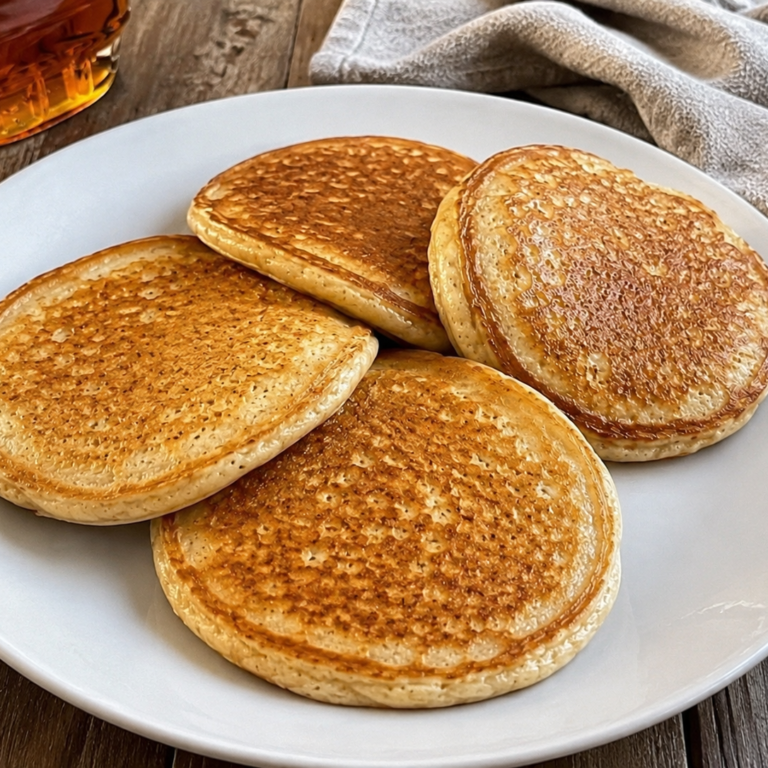
These Easy Gluten-Free Oat Pancakes are a simple, wholesome breakfast made with everyday ingredients and blended into a smooth batter. They are soft in the center, lightly golden around the edges, and naturally delicious with fresh berries, yogurt, nut butter, or your favorite syrup.
Using oats as the base gives these pancakes a pleasant texture and mild nutty flavor. The blender also makes preparation especially easy because the ingredients can be combined in one container, creating a smooth batter with minimal cleanup.
If you are following a gluten-free diet, be sure to use certified gluten-free oats, as regular oats can be exposed to gluten during processing.
Ingredients
For approximately 4 servings:
- 2 cups certified gluten-free rolled oats
- 2 large eggs
- 1 cup milk of your choice
- 1 tablespoon maple syrup or honey
- 1 teaspoon vanilla extract
- 1 teaspoon baking powder
- ½ teaspoon ground cinnamon
- ¼ teaspoon salt
- 1 tablespoon melted butter or coconut oil, plus extra for cooking
Optional Additions
You can customize the pancakes with:
- Fresh blueberries
- Sliced strawberries
- Banana slices
- Sugar-free chocolate chips
- Chopped walnuts or pecans
- A little extra cinnamon
- A pinch of nutmeg
Why You’ll Love These Oat Pancakes
These pancakes are ideal when you want a quick breakfast without using traditional wheat flour. Instead of combining several different gluten-free flours, the recipe uses rolled oats as the main dry ingredient.
The blender does most of the work. Simply add the ingredients, blend until smooth, and cook the pancakes in a lightly greased skillet.
The result is a stack of soft, tender pancakes with lightly crisp edges and a delicious oat flavor.
They are also easy to customize. You can keep the batter simple or add berries, cinnamon, chocolate chips, or chopped nuts depending on what you have available.
Step 1: Prepare the Oats
Place the certified gluten-free rolled oats into a blender.
Blend the oats by themselves for approximately 20–30 seconds, or until they become a fine oat flour.
You do not need to make the oats completely powdery. A little texture is fine, but a finer consistency will generally produce softer pancakes.
If your blender is powerful enough, you can also add all the ingredients at once and blend everything together.
Step 2: Add the Remaining Ingredients
Add the eggs, milk, maple syrup or honey, vanilla extract, baking powder, cinnamon, salt, and melted butter or coconut oil to the blender.
Blend for approximately 30–45 seconds, stopping once or twice to scrape down the sides if necessary.
The batter should look smooth and pourable.
Avoid blending for much longer than necessary. Once everything is combined, stop the blender.
If the batter seems too thick, add a small splash of milk and blend briefly.
If it seems too thin, allow it to sit for a few minutes. The oats will absorb some of the liquid and naturally thicken the batter.
Step 3: Let the Batter Rest
Allow the batter to rest for approximately 5 minutes.
This small step helps the oats absorb the liquid and gives the batter a thicker consistency.
After resting, check the batter again.
It should be thick enough to sit on the pan for a moment when poured, but it should still spread naturally into a pancake shape.
If it has become too thick, add a tablespoon of milk at a time until you reach the desired consistency.
Step 4: Heat the Pan
Place a non-stick skillet or frying pan over medium-low to medium heat.
Lightly grease the pan with butter or coconut oil.
Allow the pan to warm for a minute or two before adding the batter.
Avoid using very high heat. Oat pancakes can brown quickly, so moderate heat gives the center enough time to cook without burning the outside.
You can test the temperature by dropping a tiny amount of batter into the pan. It should gently begin cooking without immediately becoming dark.
Step 5: Cook the Pancakes
Pour approximately ¼ cup of batter onto the heated pan for each pancake.
Depending on the size of your pan, you can cook two or three pancakes at a time.
Allow each pancake to cook for approximately 2–3 minutes.
You will notice small bubbles beginning to form on the surface. The edges should also look more set and slightly dry.
Once the underside is golden brown, carefully slide a spatula underneath and flip the pancake.
Cook the second side for another 1–2 minutes, or until golden and cooked through.
Transfer the finished pancake to a plate.
Repeat with the remaining batter, adding a little more butter or oil to the pan when necessary.
How to Get Soft and Fluffy Oat Pancakes
The consistency of the batter is one of the most important factors.
If the batter is too thick, the pancakes may become heavy. If it is too thin, they may spread too much and become difficult to flip.
Letting the batter rest for a few minutes helps the oats absorb liquid naturally.
Cooking at moderate heat is also important. High heat can cause the outside to brown before the center has finished cooking.
Finally, avoid making the pancakes too large. Smaller pancakes are easier to flip and tend to cook more evenly.
Serving Ideas
These pancakes are delicious served warm straight from the pan.
For a classic breakfast, stack three or four pancakes and add a drizzle of maple syrup.
Fresh fruit is another easy topping. Try blueberries, strawberries, raspberries, or sliced banana.
For extra creaminess, add Greek yogurt or a spoonful of nut butter.
You can also sprinkle chopped walnuts or pecans over the top for some crunch.
For a dessert-style breakfast, add strawberries and a small amount of melted chocolate or sugar-free chocolate chips.
A light dusting of cinnamon can also add a lovely warm flavor.
Flavor Variations
Banana Oat Pancakes
Add one ripe banana to the blender with the other ingredients. The banana adds natural sweetness and gives the pancakes a softer texture.
Blueberry Oat Pancakes
After blending the batter, gently fold fresh blueberries into the mixture rather than blending them.
This keeps the berries whole and creates little bursts of blueberry flavor throughout the pancakes.
Chocolate Oat Pancakes
Add 1–2 tablespoons of unsweetened cocoa powder to the blender.
You may also add sugar-free chocolate chips after blending.
Cinnamon Apple Pancakes
Add extra cinnamon to the batter and serve the finished pancakes with thinly sliced cooked apples.
Peanut Butter Oat Pancakes
Add a tablespoon of smooth peanut butter to the batter for a richer, nuttier flavor.
Making the Batter Ahead
You can prepare the batter ahead of time and keep it covered in the refrigerator for a short period.
Because oats continue absorbing liquid, the batter may become thicker after refrigeration.
Before cooking, stir it gently and add a small amount of milk if necessary.
For the best texture, freshly blended batter is recommended.
Storing Leftover Pancakes
Allow leftover pancakes to cool completely before storing them.
Place them in an airtight container and refrigerate for up to several days.
For longer storage, arrange the cooled pancakes with baking paper between each one and place them in a freezer-safe bag or container.
When you want breakfast, simply warm the pancakes in the microwave, toaster, or a skillet over low heat.
Frozen pancakes can be reheated directly, making them convenient for busy mornings.
Gluten-Free Tips
The most important consideration is the oats.
Although oats themselves are naturally gluten-free, cross-contact can occur during growing, transportation, processing, or packaging.
For someone with celiac disease or a strict gluten-free requirement, choose certified gluten-free oats and check the labels of all other packaged ingredients.
Also use clean utensils, cookware, and preparation surfaces to prevent cross-contact with wheat products.
Frequently Asked Questions
Can I use quick oats?
Yes, quick oats can work, although rolled oats generally provide a pleasant texture. The batter may become slightly softer when using quick oats.
Can I make these without milk?
Yes. You can use your preferred dairy-free milk, such as almond, coconut, or oat milk. Water can also work, although milk usually gives a richer flavor.
Can I make them without eggs?
Eggs help provide structure and tenderness. If you need an egg-free version, you can experiment with an appropriate egg substitute, although the texture may change.
Why are my pancakes too dense?
The batter may be too thick, or the pancakes may have been cooked over heat that was too high. Letting the batter rest and adjusting it with a little milk can help.
Final Thoughts
These Easy Gluten-Free Oat Pancakes are a simple breakfast that combines convenience, great texture, and plenty of room for customization. The blender makes the batter quick to prepare, while the oats give the pancakes a naturally satisfying flavor.
Serve them with fresh fruit and yogurt for a simple breakfast, or add chocolate chips, nut butter, or your favorite syrup when you want something more indulgent.
Once you have the basic recipe down, you can easily change the flavors depending on what you have in the kitchen. They are simple enough for a weekday breakfast and delicious enough for a relaxed weekend morning.

