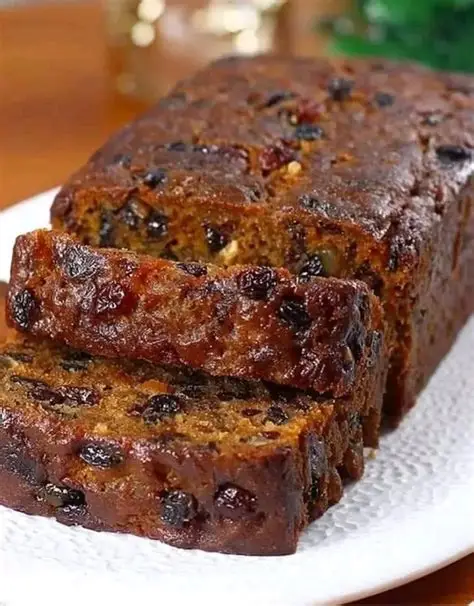
This Classic Moist Fruit Cake is a rich, tender, and beautifully spiced homemade cake packed with dried fruits, nuts, and warm flavors. The cake in the image has a deep golden-brown color, a moist crumb, and plenty of juicy dried fruit throughout each slice. It is a wonderful choice for holidays, family gatherings, afternoon tea, or whenever you want a traditional fruit-filled dessert.
Unlike some fruit cakes that are extremely dense or dry, this version is designed to stay moist and flavorful. The dried fruits are soaked before baking, allowing them to become soft and juicy. A combination of butter, brown sugar, warm spices, and vanilla gives the cake its classic homemade flavor.
Ingredients
For the Fruit Mixture
- 1 cup raisins
- 1 cup dried currants
- ½ cup dried cranberries
- ½ cup chopped dried dates
- ½ cup chopped dried apricots
- ½ cup orange juice
- ½ cup water
- 2 tablespoons brown sugar
For the Cake
- 2 cups all-purpose flour
- 1 teaspoon baking powder
- ½ teaspoon baking soda
- ½ teaspoon salt
- 1 teaspoon ground cinnamon
- ½ teaspoon ground nutmeg
- ¼ teaspoon ground cloves
- ½ cup unsalted butter, softened
- ¾ cup brown sugar
- ¼ cup granulated sugar
- 3 large eggs
- 2 teaspoons vanilla extract
- ½ cup buttermilk
- ¾ cup chopped pecans or walnuts
- 1 tablespoon orange zest
Optional Glaze
- ½ cup powdered sugar
- 1–2 tablespoons orange juice
- ½ teaspoon vanilla extract
Step 1: Soak the Dried Fruit
Place the raisins, currants, dried cranberries, dates, and dried apricots into a saucepan.
Add the orange juice, water, and brown sugar.
Place the saucepan over medium heat and bring the mixture to a gentle simmer. Cook for approximately 5 minutes, stirring occasionally.
Remove from the heat and allow the fruit mixture to cool.
For an even richer fruit cake, you can prepare this mixture several hours ahead and allow the fruit to soak for longer. The longer soaking time allows the dried fruit to absorb more moisture and become softer.
Do not add hot fruit directly to the cake batter. Allow it to cool to room temperature first.
Step 2: Prepare the Oven and Pan
Preheat your oven to 325°F (165°C).
Grease a 9-inch loaf pan or deep 8-inch round cake pan.
Line the bottom and sides with parchment paper, leaving a little paper extending over the sides to make the cake easier to remove.
A loaf pan works particularly well if you want a shape similar to the cake shown in the image.
Step 3: Prepare the Dry Ingredients
In a medium bowl, whisk together:
- Flour
- Baking powder
- Baking soda
- Salt
- Cinnamon
- Nutmeg
- Ground cloves
Mix thoroughly so the spices and leavening agents are evenly distributed.
Set the bowl aside.
Step 4: Cream the Butter and Sugar
Place the softened butter, brown sugar, and granulated sugar into a large mixing bowl.
Using an electric mixer, beat for approximately 3–4 minutes.
The mixture should become lighter, creamy, and fluffy.
This step helps create a tender cake texture.
Add the eggs one at a time, beating well after each addition.
Add the vanilla extract and orange zest.
Mix until everything is smooth and well combined.
Step 5: Add the Flour
Gradually add the dry ingredients to the butter mixture.
Alternate the flour mixture with the buttermilk.
For example, add one-third of the flour mixture, followed by half of the buttermilk. Repeat and finish with the remaining flour.
Mix gently and only until the ingredients are incorporated.
Do not overmix the batter because excessive mixing can make the finished cake heavier.
Step 6: Add the Fruit and Nuts
Make sure the soaked fruit has cooled completely.
If there is a large amount of liquid remaining, drain a little excess liquid. You want the fruit to be moist but not dripping wet.
Add the fruit and chopped pecans or walnuts to the cake batter.
Using a spatula, gently fold everything together.
Try to distribute the fruit evenly throughout the batter so every slice contains plenty of fruit.
Step 7: Fill the Cake Pan
Transfer the batter into the prepared pan.
Use a spatula to spread the top evenly.
Because fruit cakes are relatively dense, gently tap the pan on the countertop once or twice to remove any large air pockets.
Smooth the top with a spatula.
Step 8: Bake the Fruit Cake
Place the pan in the center of the preheated oven.
Bake for approximately 70–90 minutes.
The exact baking time will depend on the size and depth of your pan.
Start checking around 70 minutes.
Insert a wooden skewer or toothpick into the center. It should come out clean or with a few moist crumbs attached.
If the top of the cake becomes dark before the center is finished, loosely cover the cake with aluminum foil and continue baking.
This prevents the fruit on top from becoming overly dark.
Step 9: Cool the Cake
Once the cake is fully baked, remove it from the oven.
Allow it to cool in the pan for approximately 15–20 minutes.
Then carefully lift the cake out using the parchment paper.
Place it on a wire rack and allow it to cool completely.
It is important not to slice the cake while it is still very hot because the moist fruit-filled center can crumble.
For the best texture, allow the cake to rest for several hours before serving.
Step 10: Make the Optional Glaze
If you want a simple glaze, combine powdered sugar, orange juice, and vanilla extract in a small bowl.
Whisk until smooth.
If the glaze is too thick, add a few drops of orange juice.
If it is too thin, add a little more powdered sugar.
Once the cake has completely cooled, drizzle the glaze over the top.
Allow it to set for approximately 15 minutes before slicing.
Tips for a Moist Fruit Cake
Soak the fruit
Soaking the dried fruit is one of the easiest ways to create a moist fruit cake. It softens the fruit and prevents the finished cake from becoming dry.
Don’t overmix
Once the flour has been added, mix only until combined. Overmixing can affect the texture.
Use room-temperature ingredients
Room-temperature butter and eggs blend more easily and create a smoother batter.
Bake slowly
Fruit cake is dense and contains a lot of moisture, so it benefits from a lower oven temperature and longer baking time.
Protect the top
If the cake is browning too quickly, cover it loosely with foil.
Let it rest
Fruit cake often tastes even better after it has rested. The flavors have more time to develop, and the texture becomes beautifully moist.
Variations
There are many ways to customize this recipe.
For a citrus version, replace some of the orange juice with lemon juice and add extra orange or lemon zest.
For a nut-free cake, simply leave out the pecans or walnuts.
For a richer flavor, add a teaspoon of almond extract along with the vanilla.
You can also add chopped candied orange peel, cherries, or other dried fruits.
If you prefer a sweeter cake, increase the amount of dried cranberries or add a little extra brown sugar.
Serving Suggestions
This fruit cake is delicious served at room temperature with tea or coffee.
You can serve it plain, with a light dusting of powdered sugar, or with the orange glaze.
For a special dessert, serve a warm slice with whipped cream or vanilla ice cream.
During the holidays, arrange thin slices on a dessert platter with other homemade treats.
Storage
Once completely cooled, wrap the fruit cake tightly in plastic wrap or place it in an airtight container.
Store it at room temperature for several days if your kitchen is cool.
For longer storage, refrigerate the cake in an airtight container.
You can also freeze individual slices. Wrap each slice well and place them in a freezer-safe container.
When ready to eat, allow the slices to thaw at room temperature.
Final Thoughts
This Classic Moist Fruit Cake is a beautiful traditional dessert packed with colorful dried fruits, crunchy nuts, warm spices, and rich homemade flavor. The combination of soaked fruit, brown sugar, butter, orange zest, and spices creates a cake that is moist and flavorful rather than dry.
It is especially lovely during the holiday season, but there is no reason to wait for a special occasion. Slice it alongside a cup of tea or coffee and enjoy a simple homemade treat that looks just as impressive as it tastes.
The recipe can also be adapted into mini fruit cakes by dividing the batter between smaller loaf or Bundt-style pans and reducing the baking time.

